

Drilling team contributes to sustainable CO2 storage
All countries that have signed the Paris Climate Agreement must reduce their CO2 emissions and provide sustainable energy supplies. The project Hanab Directional Drilling is working on in Norway is an example of accelerated decarbonisation. It is supported by the Norwegian government and being carried out by the Northern Lights Joint Venture, comprising Shell, Total and Equinor. The latter is responsible for the terminal and is thus our point of contact.

Carbon Capture & Storage; CO2 storage
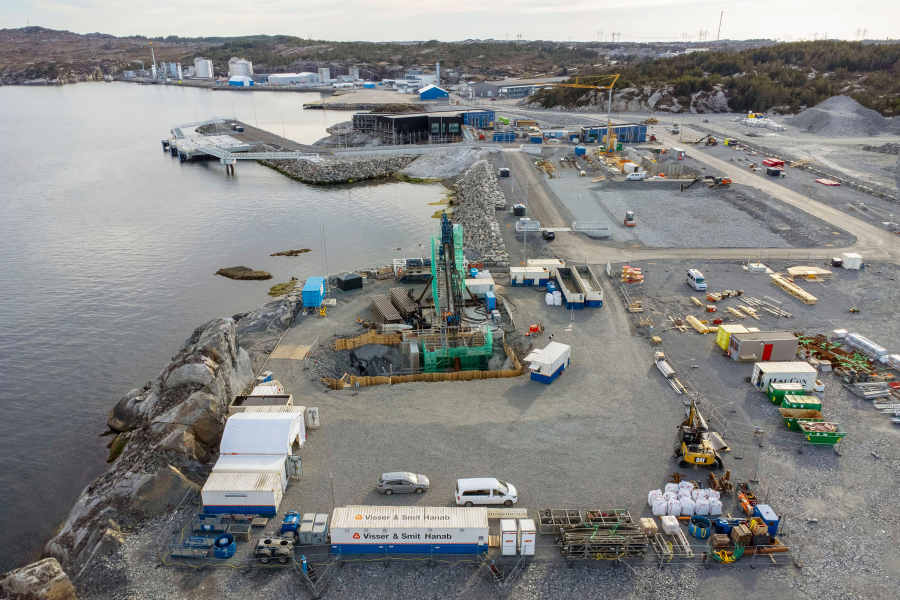
Equinor is developing an open and flexible infrastructure to transport CO2 by ship from capture sites to a terminal in western Norway for interim storage. The receiving terminal is located on the site of Naturgassparken, a 45-minute drive from Bergen, Norway. From here, a pipeline is being laid across the seabed to an underground reservoir around 100 km off the Norwegian coast. The CO2 is transported via pipeline to a reservoir 2,600 metres below the seabed for permanent storage. This facility will provide safe and permanent underground storage for industries across Europe.
VOn this project, we are working with suppliers and subcontractors from Norway, as well as from the Netherlands, Germany and the United Kingdom, giving the project a truly international flavour. The first phase of the project will be completed in mid-2024, with a capacity of up to 1.5 million tonnes of CO2 per year.

Drilling a steep tunnel through granite
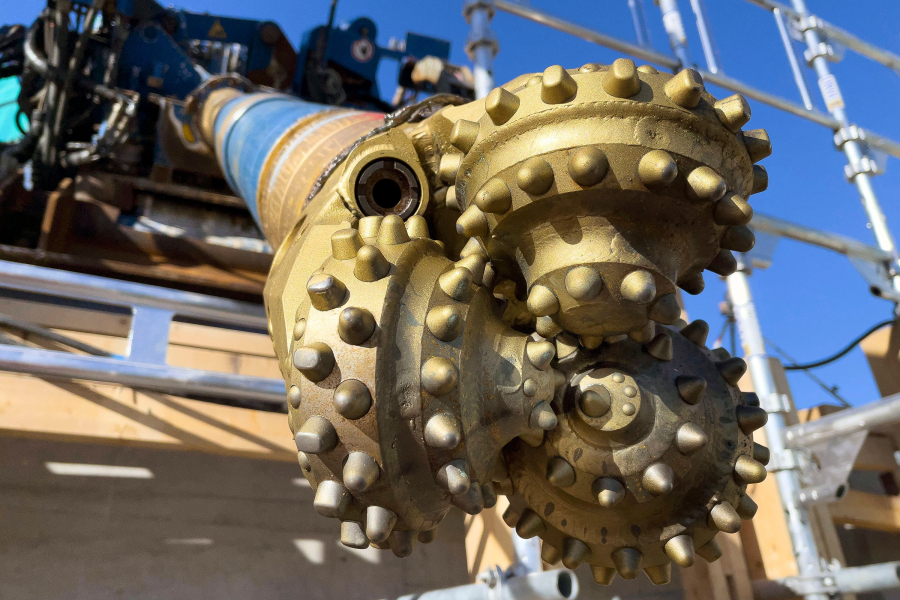
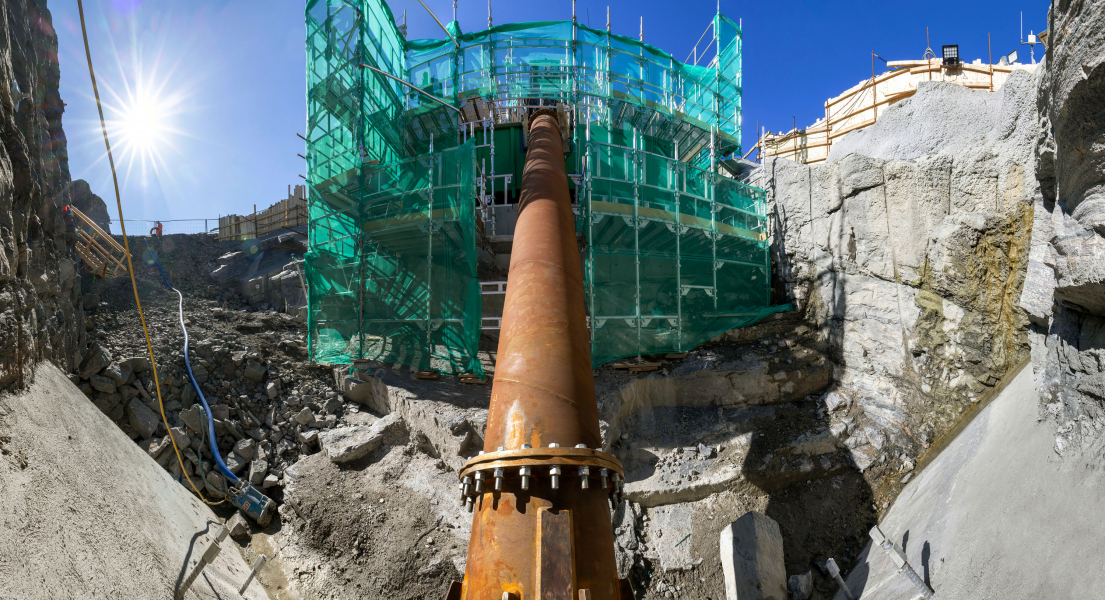
At the receiving terminal, Hanab Directional Drilling is working on the link between the onshore and offshore sections of the pipeline – a relatively small but essential part of the project. For this, we are using HDD, starting on land and finishing the drilling deep within the fjord.
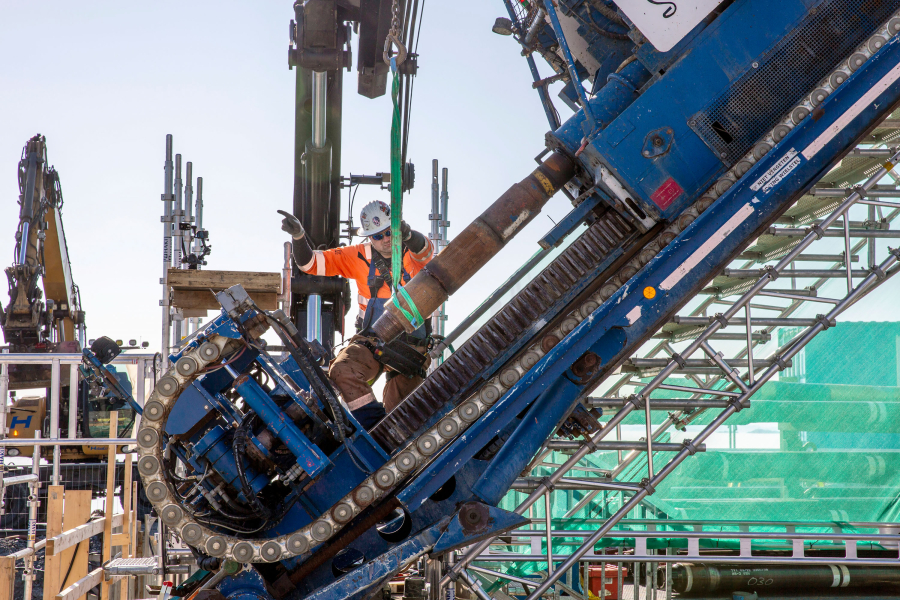
The tunnel has a diameter of 24” (approx. 0.6 m) and a total length of 680 metres, running straight through the Norwegian granite. What makes this drilling particularly challenging, aside from the difficult ground conditions, is the steep entry angle of 44° and the depth of the exit, which is over 260 metres (!) below sea level.

Equipment runs entirely on renewable energy
Another key aspect of this project is the power supply for the drilling equipment itself as it runs entirely on electricity supplied by the customer. By making a number of adjustments to the equipment, we can run a more energy-efficient project with an instantaneous saving of around 2,000 m³ of diesel per day. An additional bonus is that Norway generates 98 per cent of its electricity from renewable sources, which we also benefit from.

In-house engineering and proven craftsmanship make the difference
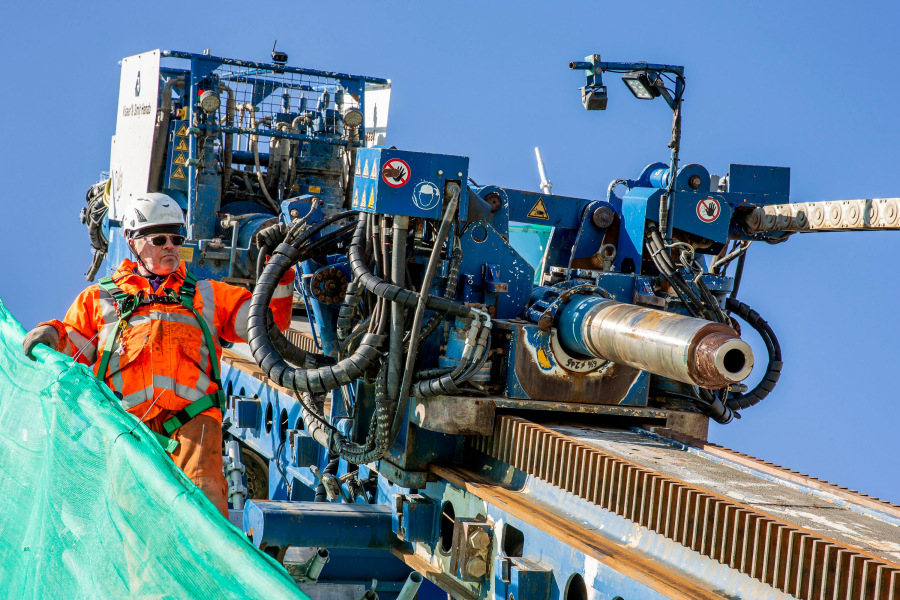
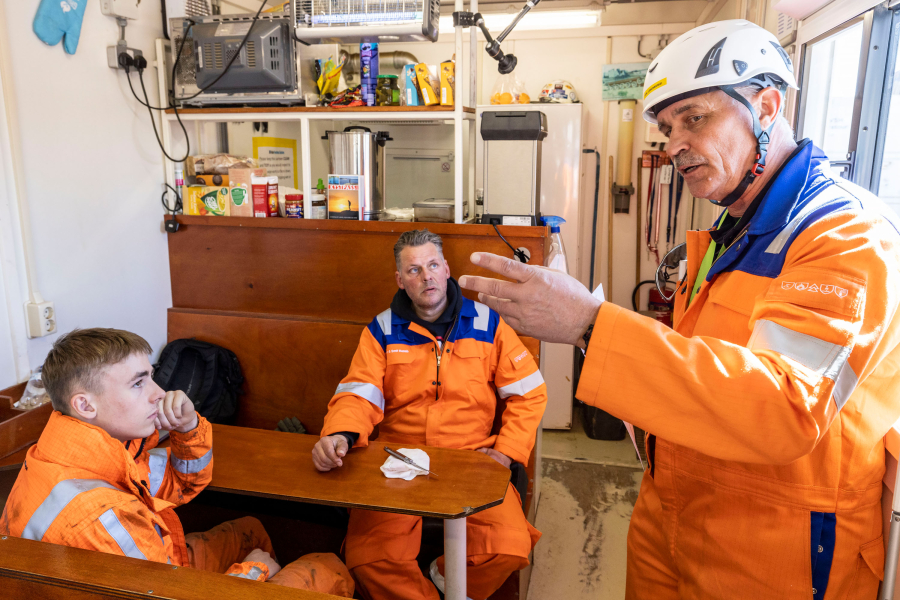
Working in collaboration with our engineers, structural engineers and geologist, our drilling team developed a plan to carry out the work with at low risk and with high efficiency.
This is where the strengths of Hanab Pipelines & Utilities really came together – our Technical Office, with its mathematical expertise and engineering knowledge, and the technical and practical insights of those working in the field. The experience gained from previous rock drilling projects, including those in Norway, provided valuable input for the project. We are proud that the team is a mixture of young, well-trained colleagues and experienced colleagues who have gained their professional expertise through practical experience, supported from Papendrecht by the best engineers in our field.

Strict (safety) monitoring of the drilling process
A great deal of attention was paid to the drilling equipment and the specific drilling process before the project got underway. Our structural engineers designed a special frame that allows the drilling rig to be positioned at a steep angle whilst still being able to absorb all significant forces and vibrations that occur when drilling into hard rock.
During the drilling process, tests and trials were carried out to verify the various parameters, ensure the process could run smoothly and safely and make any necessary adjustments. We also carried out regular inspections using an ROV (Remotely Operated Underwater Vehicle), which gave us some truly spectacular images.